Every room, the right temperature.
We are an HVAC contractor in Stockton handling air conditioning repair, installation, heating service, and air quality work for homes and small commercial sites from Brookside to Weston Ranch. If you have been searching "HVAC contractor near me" during a July heat wave or a Tule fog cold snap, you want a straight answer on cost and timing — and that is what this page gives you. Every price here is an honest ballpark; the exact number is confirmed on a free on-site visit before any work starts.
Tell us about your hvac contractor job — we'll get you a fast quote.
A firm, all-in price confirmed before we start — no surprises.
On time, done to standard, and tidy when we leave.
Reach a real Stockton hvac contractor technician to describe the problem — no call-center runaround.
We look at the actual system and explain what is going on before any work.
You get the price for the fix up front and decide before we proceed.
Serving Stockton and the surrounding area — confirm coverage by phone.
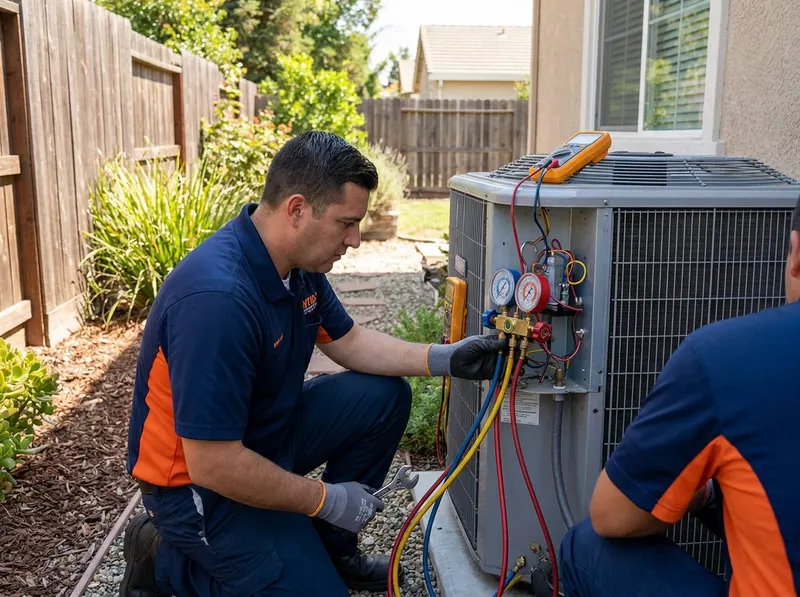
Stockton summers routinely push past 100°F through July and August, and that heat is exactly when a marginal AC finally quits. A unit that cooled fine in June can trip on a weak capacitor by mid-afternoon in a Weston Ranch or Spanos Park home once the condenser is running flat-out for hours. The most common Stockton repairs we see are a swollen run capacitor, a pitted contactor, a seized condenser fan motor, and a condensate drain clogged enough to trip the safety float and shut the system off. Each of these is a targeted fix, not a replacement.
AC repair fits when the system is under roughly 10-12 years old, the failure is a single component, and the ductwork and coils are otherwise in decent shape. If your condenser sits in the sun on a west-facing Brookside or Lincoln Village lot, expect the outdoor components to age faster than a shaded unit — repair still makes sense, but check the capacitor and contactor as a pair. Repair becomes the weaker choice when the compressor is failing on an older R-22 system, since the refrigerant is expensive and no longer manufactured; at that point replacement is usually the smarter dollar. We'll tell you honestly which side of that line your unit is on.
Stockton's alkaline soil and hard water don't help either. Older Morada and Country Club homes often have condensate lines that scale up and clog, and Delta-area humidity late in the season adds to that. A low refrigerant charge almost always means a leak, not "topping off" — we look for the leak rather than just adding coolant, because a recharge on a leaking coil is money spent twice. For homes near the Miracle Mile (Pacific) with tight side-yard clearances, we plan condenser access before the visit so the repair moves quickly.
Every repair starts with a real diagnostic: we confirm the actual cause, quote it before we touch anything, and only proceed once you approve. Call (209) 209-7764 and we'll get a technician out to Quail Lakes, Sherwood Manor, Park Village, or wherever you are in San Joaquin County.
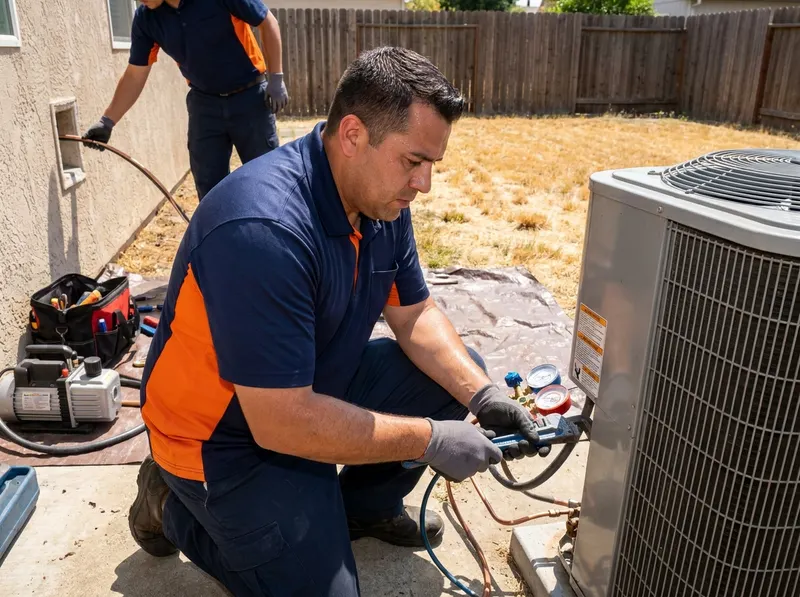
Choosing the right size matters more than the brand. Stockton summers push past 100°F for stretches, and an oversized unit short-cycles — cooling the air fast but never running long enough to pull humidity or reach even temperatures across the house. An undersized unit runs constantly and still can't keep up. A Manual J-style load calculation, based on your square footage, insulation, window exposure, and the direction the home faces, sets the correct tonnage before any equipment is ordered. That step is why an on-site visit is required to confirm price and specification.
New installation is the right call when a system is 12 to 15 years old, uses discontinued R-22 refrigerant, needs a compressor replacement, or fails a second time in a season. Repair usually makes more sense on newer units with an isolated part failure. The trade-off is upfront cost versus ongoing efficiency: a modern high-SEER2 system in a Brookside or Spanos Park home cuts the summer electric bill and cools more evenly, while patching an aging unit defers the expense but keeps you at yesterday's efficiency and rising repair risk.
Stockton's housing mix changes the job. Older bungalows near the Miracle Mile and central Pacific often have tight attics and existing ductwork that should be inspected before a new unit is set. Homes in Weston Ranch, Morada, and Sherwood Manor built with slab foundations and single-story layouts tend to be straightforward one-day changeouts. Larger two-story homes in Lincoln Village, Quail Lakes, Country Club, and Park Village sometimes benefit from a discussion about zoning or a second system so the upstairs isn't fighting the heat. Delta breezes help in the evenings, but the afternoon load is real, and the equipment has to be built for it.
Every install ends with a startup: refrigerant pressures checked, airflow verified, thermostat paired, and the condensate drain confirmed so it won't back up during the long cooling season. Existing line sets are either flushed or replaced depending on the old refrigerant type, and the electrical disconnect and breaker are checked for the new unit's draw.
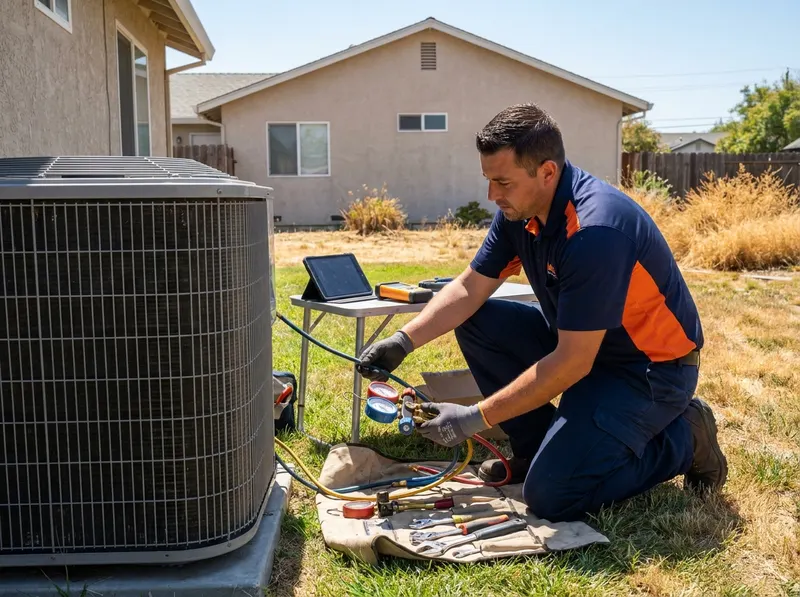
A tune-up fits homeowners whose AC still cools but hasn't been serviced in a year or more, and it is the right call when you want to lower summer energy bills and avoid a mid-July failure. Stockton's dry heat, dusty summers, and pollen-heavy springs load up condenser coils fast, especially in older Pacific (Miracle Mile) bungalows and the tree-lined lots around Victory Park where leaf debris clogs outdoor units. Cleaning that coil restores heat transfer, so the compressor works less and the house cools faster. The trade-off versus a repair call is timing: maintenance is cheap and quick when nothing is broken, while waiting until the unit quits on a 105°F afternoon means an emergency visit at a higher rate.
Choose a tune-up over a full repair when the system is under roughly 12 years old and cooling reasonably, but you notice higher bills, uneven rooms, or a unit that runs longer than it used to. In newer builds around Spanos Park and Brookside, tune-ups mostly keep warranties valid and confirm refrigerant charge is correct. In Weston Ranch and Sherwood Manor, where many systems date to the 1990s and early 2000s, a tune-up often surfaces a weak capacitor or a slow refrigerant leak early — problems that are far cheaper to address before they strand you. If the technician finds an active fault, that becomes a separate repair quote you approve before any parts are replaced.
Stockton's water and dust conditions make two tune-up steps matter more here than in milder climates. Condensate drains clog with algae in the humidity that builds along the Delta, which can trip a float switch and shut the system down; clearing that line during maintenance prevents a false failure. Condenser fins pack with fine valley dust and, near Morada and Country Club, agricultural particulate, so a proper rinse and fin-straightening protects capacity through the long cooling season. Homes in Lincoln Village, Quail Lakes, and Park Village on annual maintenance tend to hold their efficiency and full lifespan better than units left unserviced.
Booking one visit in spring covers you for the season. We inspect the full split system — indoor coil, blower, outdoor condenser, and thermostat — and give you a plain written summary of what's in good shape and what to watch.
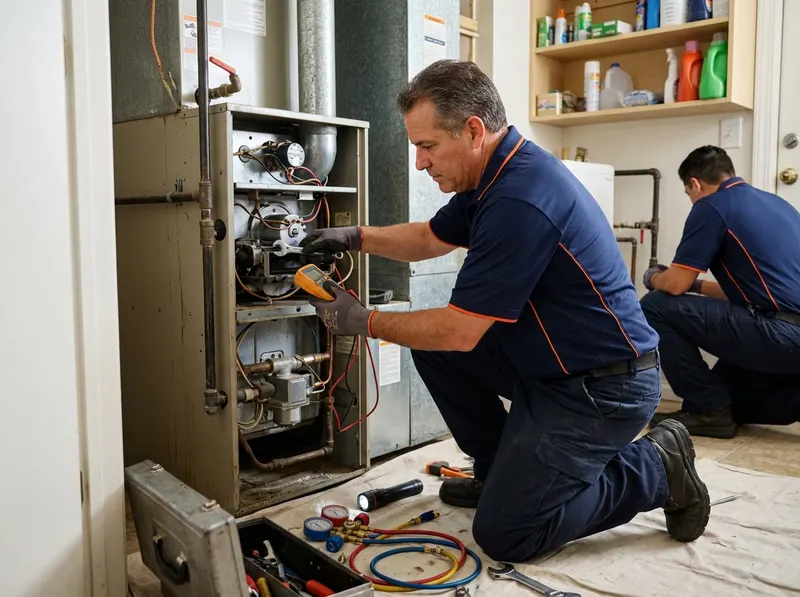
Furnace repair fits when a system is under roughly 12-15 years old and the failure is a single component. A blower that hums but won't spin, a furnace that ignites then shuts off after a minute, or intermittent no-heat mornings usually trace to one part — a cracked ignitor, a dirty flame sensor, or a worn capacitor. In those cases a targeted repair costs far less than replacement and restores full heat the same visit. Replacement makes more sense when the heat exchanger is cracked, the unit is past 15 years and repairs are stacking up, or the cost to fix approaches half the price of a new furnace. The technician will lay out both paths honestly so you decide with real numbers, not pressure.
Stockton's heating season is short but sharp — Tule fog and 30s-to-low-40s overnight lows through December and January push furnaces hard after months of sitting idle. That idle stretch is exactly why so many no-heat calls cluster around the first cold week: dust settles on the flame sensor over summer, and the first hard run exposes a marginal ignitor. Homes in older Pacific (Miracle Mile) and Victory Park neighborhoods often run aging gas furnaces in tight closet or attic spaces where airflow and venting matter, while newer builds in Spanos Park, Brookside, and Weston Ranch tend toward high-efficiency condensing units with condensate lines that can clog and lock out the unit. Lincoln Village, Quail Lakes, and Country Club homes see a mix, so diagnostics start with the specific model on site rather than assumptions.
A typical visit begins with a safety check — verifying the gas supply, testing for proper ignition sequence, and checking the heat exchanger and flue. From there the tech isolates the fault, quotes the repair before touching a wrench, and completes it if you approve. Common Stockton fixes include cleaning or swapping a flame sensor, replacing a hot-surface ignitor, freeing a stuck gas valve, or changing a failed blower capacitor or motor. If the furnace serves a two-story home in Morada or Sherwood Manor with uneven heat, the tech can also flag airflow or duct issues contributing to short-cycling.
Emergency and after-hours no-heat calls are handled during cold stretches when losing heat overnight is a real risk, especially in homes with older residents or infants. Booking is a single call to (209) 209-7764 — describe the symptom, the furnace's approximate age, and your Park Village or other neighborhood address, and a visit is scheduled with the diagnostic and repair options explained up front.
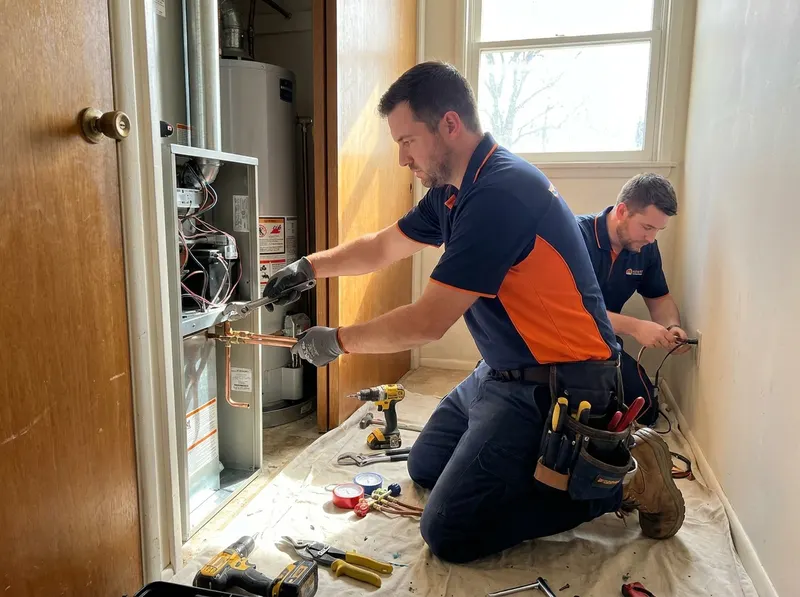
Replacement makes sense when a furnace is past roughly 15 years, needs a repair that costs a large share of a new unit, or keeps failing through Stockton's cold Delta-fog mornings. If your system is younger and the fault is a single part, repair is usually the better value — we'll tell you straight which way the math points. The trade-off is upfront cost versus reliability: a new system carries a manufacturer warranty and runs more efficiently, while a repair buys time on aging equipment that may fail again during the next cold snap off the San Joaquin.
Sizing is the part that gets rushed elsewhere and matters most here. An oversized furnace short-cycles and leaves rooms uneven; an undersized one runs constantly on the coldest January nights. Stockton homes vary widely — the newer builds out in Spanos Park and Brookside often have tighter envelopes and better ducting, while older Pacific (Miracle Mile) and Country Club houses near University of the Pacific may need duct or return-air adjustments before a new unit performs correctly. We measure the home rather than swap like-for-like on assumption alone.
Heat pump versus gas furnace is a real decision in San Joaquin County. Stockton's mild winters and hot Central Valley summers make a heat pump attractive because it handles both heating and cooling, and it pairs well with homes in Weston Ranch, Quail Lakes, and Lincoln Village that already lean on electric cooling. A gas furnace still fits homes with existing gas service that want strong, fast heat on the coldest mornings. During the on-site visit we walk your options for Morada, Sherwood Manor, or Park Village properties and match equipment to how you actually use the house.
Every replacement includes proper haul-away of the old unit, permitting where required, and a full startup so you're not left guessing whether the new system runs right. The minimum charge for any dispatch is $150, and that visit fee is disclosed before we roll a truck.
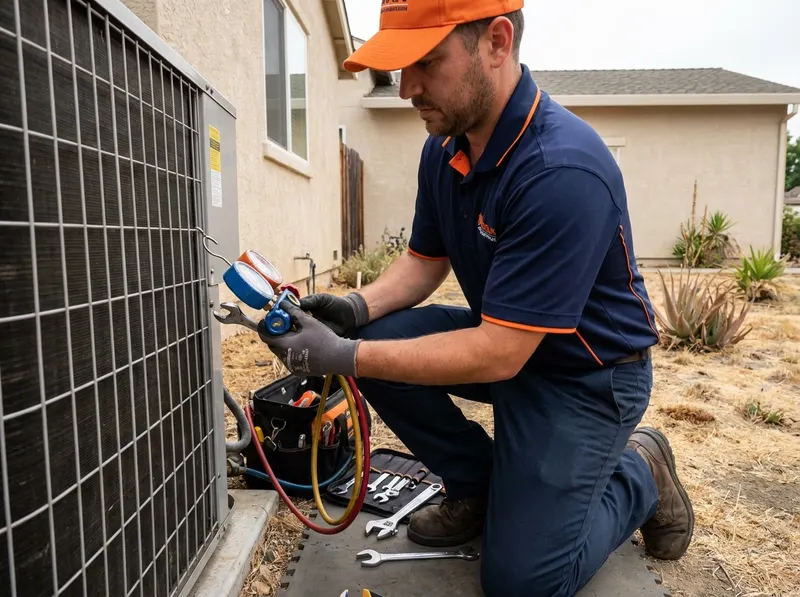
A heat pump service makes sense when you own an all-in-one system rather than a separate furnace and AC. In Stockton's climate, heat pumps handle the long cooling season well and cover the milder winters without a gas furnace, which is why they show up in newer Spanos Park and Brookside builds and in remodeled Lincoln Village homes. If your unit struggles to cool in July heat or blows lukewarm air in a January cold snap, service diagnostics can separate a refrigerant issue from a reversing valve or defrost-control fault. The trade-off versus a straight AC or furnace repair: a heat pump has more moving logic to check, so the diagnostic step matters more, but you only maintain one outdoor unit instead of two systems.
Summer heat is the harder test for Stockton heat pumps. Units near the Delta in Weston Ranch and along the Pacific (Miracle Mile) corridor pull long runtimes on 100-plus-degree afternoons, and dirty coils or low refrigerant show up first as weak cooling. Regular service keeps the outdoor coil clear and verifies the system switches cleanly between heating and cooling, since the reversing valve is the part most people never think about until it sticks. For Quail Lakes and Country Club homes with older heat pumps, a service visit is also the honest moment to weigh repair cost against age and efficiency.
We verify airflow, static pressure, and electrical connections during service because Stockton's summer load punishes weak capacitors and contactors. Homes in Morada and Park Village on well or older panels sometimes reveal electrical faults that only appear under full cooling demand. On a service call we confirm the actual fault before quoting the fix, so you're not paying for guesses. Exact pricing is confirmed on-site after the diagnostic — the ranges below are ballparks for planning.
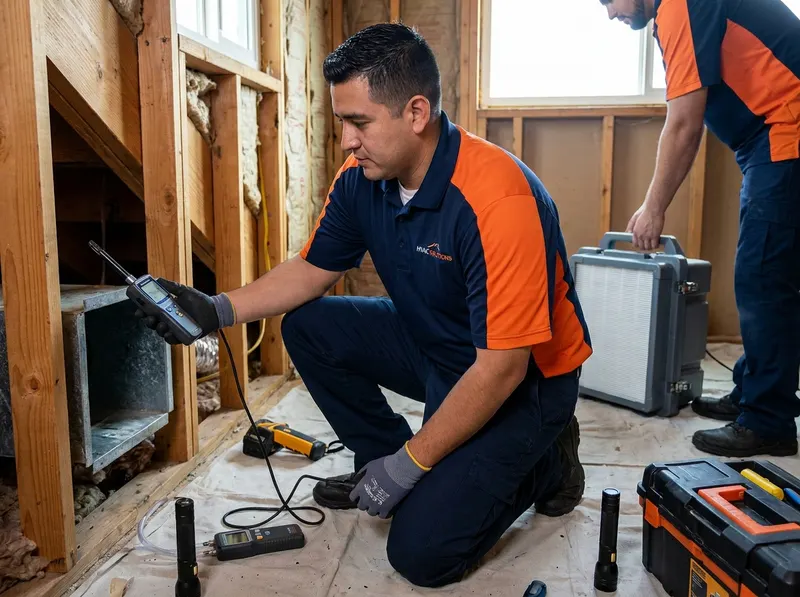
Stockton's air quality challenges are seasonal and local. Summer haze and wildfire smoke drifting into the Central Valley push fine particulates indoors, and the flat San Joaquin County terrain traps that air on still days. Spring pollen off the trees around Victory Park and Oak Grove Regional Park loads up return-air filters faster than many homeowners expect. Indoor air quality work targets those specific problems rather than selling a one-size box.
The right solution depends on the symptom. If dust settles quickly on surfaces or family members have allergy flare-ups, a higher-MERV filter or a whole-home media cabinet at the air handler is usually the practical first step. For homes near the Delta channels in Weston Ranch or Brookside where damp air and musty smells show up, humidity control and duct inspection matter more than raw filtration. Older ranch homes around Lincoln Village and Country Club often have original ductwork with leaks that pull in attic dust, so sealing the ducts can do more for air quality than any add-on device. Newer, tighter builds in Spanos Park and Park Village hold air in better but also concentrate indoor pollutants, which is where a fresh-air or purifier approach fits.
There is a trade-off to be honest about. A denser filter cleans more but restricts airflow, and a system that already struggles can lose efficiency if you jump to the highest MERV rating without checking the blower and duct capacity. That is why an on-site assessment comes first: we look at your equipment in Quail Lakes, Morada, Pacific (Miracle Mile), or Sherwood Manor before recommending a filter grade, a media cabinet, a purifier, or duct work. Some homes need one small change; others benefit from a layered setup. We will tell you which.
Booking is straightforward. Call (209) 209-7764 for a free on-site visit anywhere in Stockton and San Joaquin County. We assess your current filtration and ductwork, explain the options in plain terms, and give a written ballpark before any work begins.
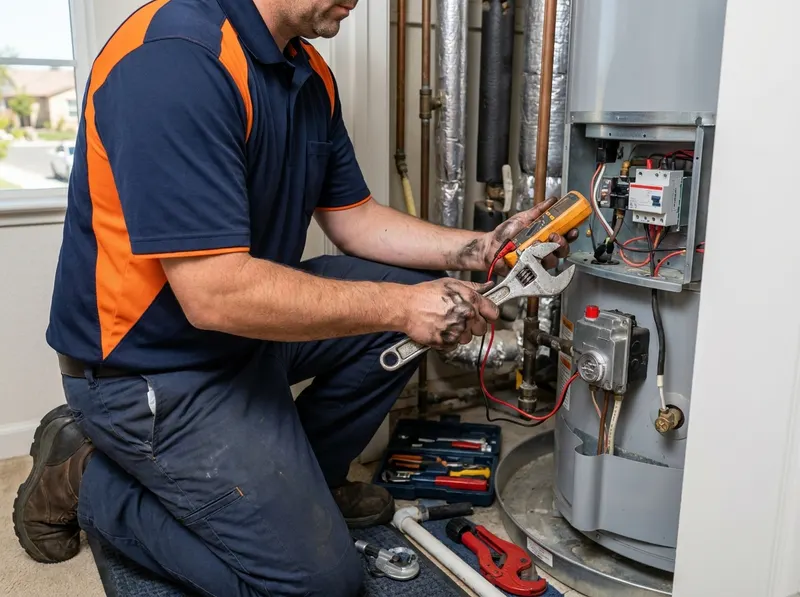
Repair makes sense when the tank is not leaking from the body and the unit is under roughly 8 to 10 years old. A gas water heater that won't stay lit usually needs a thermocouple, igniter, or gas control valve — not a new tank. An electric unit that gives lukewarm water often has one failed heating element or a tripped thermostat, both replaceable in the same visit. Sediment rumbling, common with Stockton's hard water throughout Weston Ranch and Spanos Park, is frequently solved with a flush rather than replacement. The trade-off point: once the steel tank corrodes through and drips from the bottom seam, no repair holds, and replacement is the honest recommendation.
Stockton's water chemistry drives most of the repairs we see. Homes on well-influenced supply around Morada and outer Country Club build scale faster, which shortens element life and clogs tankless heat exchangers. Older two-story homes near the Pacific (Miracle Mile) district and Victory Park often have heaters tucked in tight closets or garages where a corroded relief valve or drip pan issue is easy to miss. Newer builds in Brookside, Quail Lakes, and Park Village more often run tankless units, where fault codes usually point to a flow sensor, ignition failure, or scale buildup that a descale service clears.
We diagnose before quoting. A technician confirms whether the problem is the part, the venting, the gas or electrical supply, or the tank itself, then gives a firm price for the specific fix. If a repair on an aging unit costs more than a meaningful share of a replacement, we say so plainly instead of patching it twice. Homeowners in Lincoln Village, Sherwood Manor, and Weston Ranch get the same straight comparison: repair cost, expected remaining life, and the replacement alternative.
Gas repairs involve combustion and venting, so relief-valve, gas-valve, and pilot work are handled with the safety checks those systems require. Leaking connections at the top of a tank, a stuck T&P valve, or a failed expansion tank are all serviceable without swapping the water heater. Booking is a single call to (209) 209-7764.
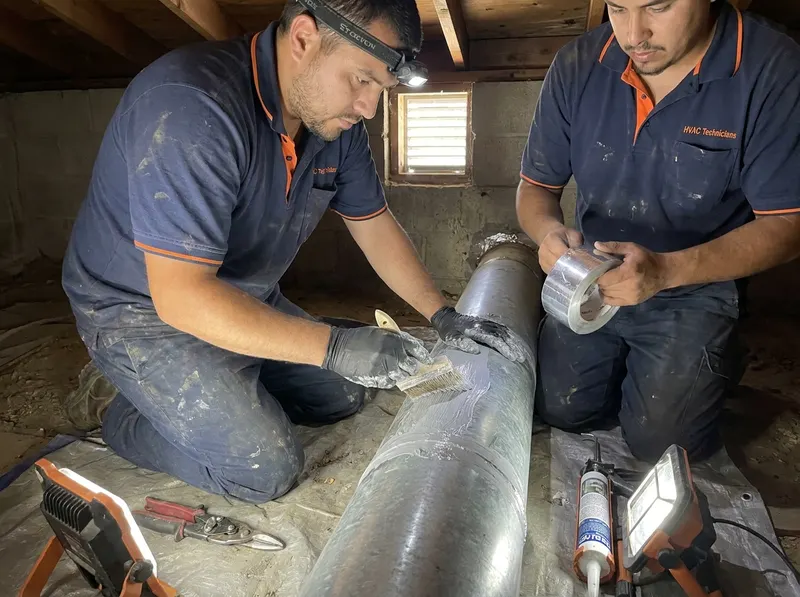
Sealing makes sense when your ducts are structurally sound but leaking at seams, boots, and plenum connections. Replacement is the better call when flex runs are torn, crushed, or moldy, or when the system was undersized from the start. On a free on-site visit we walk the runs, check static pressure, and tell you honestly which path fits your home rather than defaulting to the bigger job. Sealing is the more affordable route and often solves hot-and-cold-room complaints on its own.
Stockton's housing stock spreads the problem in predictable ways. Older Pacific (Miracle Mile) and Victory Park homes near University of the Pacific frequently have original metal ducts with dried-out joint tape that peels and leaks. Newer tract homes in Spanos Park, Weston Ranch, and Park Village lean on flexible duct in hot attics, where sagging, pinched runs and pulled-apart collars are the usual culprits. Country Club and Sherwood Manor houses with crawl-space ducting see rodent damage and moisture-loosened connections. We tailor the fix to what the run actually needs.
Leaky ducts hit hardest in a Central Valley summer, when attic temperatures climb well past 130 degrees and any air escaping into that space is pure waste. In Brookside, Lincoln Village, and Quail Lakes homes with second stories, sealing the return side and the trunk connections is often what finally cools the upstairs bedrooms. Sealing also improves comfort in Morada properties where longer duct runs lose pressure before reaching far rooms. After sealing we retest airflow so you can confirm the difference, not just take our word for it.
Duct sealing pairs well with a system tune-up or filtration upgrade, but we keep this page's scope to the ducts themselves so you're only paying for what your home needs. If the visit reveals a failing furnace or AC rather than a duct issue, we'll say so plainly and quote that separately.
If your air conditioner is under about 10 years old and the repair is a capacitor, contactor, or refrigerant issue, choose a repair — you keep the existing system running for a few hundred dollars. If the unit is 12 to 15-plus years old, uses phased-out R-22 refrigerant, and the repair quote climbs past roughly a third of replacement cost, choose a full system replacement instead; the trade-off is a larger up-front cost versus repeated repair bills and rising utility charges on an aging, low-efficiency unit. If your comfort problem is uneven temperatures or heavy dust rather than a broken unit, choose air quality and duct work — that fixes the symptom the equipment swap alone would not. For heating, if the furnace lights but short-cycles, a tune-up and part replacement usually fits; if the heat exchanger is cracked, replacement is the safe choice because a cracked exchanger can leak combustion gases. If you cool and heat with two separate systems and both are near end of life, a single heat pump can replace both at once — that fits Stockton's mild winters and consolidates two future replacements into one, though the up-front number runs higher than a standalone AC or furnace. If your home is comfortable but your bills climb every summer, a higher-SEER replacement fits better than another repair, since a 14-SEER unit swapped for a 16 or 18-SEER model cuts cooling draw noticeably during the long Valley cooling season. Homeowners planning ahead should book replacements in spring or fall, when lead times are shortest and installers are not buried in emergency heat-wave calls.
| On-site diagnostic / minimum service call | from $150 |
| AC repair (capacitor, contactor, minor parts) | $150 – $450 |
| Refrigerant recharge / leak repair | $300 – $900 |
| Blower motor replacement | $400 – $900 |
| Seasonal AC or furnace tune-up | $150 – $250 |
| Furnace / heater repair | $150 – $650 |
| Furnace igniter or flame sensor replacement | $150 – $400 |
| Central AC replacement (system + install) | $6,500 – $12,000 |
| Furnace / heating system replacement | $4,500 – $9,000 |
| Heat pump system replacement | $8,000 – $16,000 |
| Water heater repair | $150 – $500 |
| Water heater replacement | $1,600 – $3,500 |
| Indoor air quality / filtration upgrade | $300 – $1,500 |
| Ductwork repair & sealing | $400 – $2,500 |
Call for a firm, all-in price before any work begins.
We give an upfront, written price before any work begins — you approve it first. No surprises.
Our work is done to standard and we stand behind it — a real fix, not a quick patch.
We’ll give you an honest assessment. If you don’t need the work, we’ll tell you.
Stockton sits in the San Joaquin Valley, where summer afternoons routinely push past 100°F and winter mornings bring the dense Tule fog that keeps homes cold and damp — so local HVAC systems get hammered from both directions. The older tract homes around Pacific (Miracle Mile) and Victory Park often run undersized or aging ductwork, while newer builds in Spanos Park and Brookside tend to need correct load-sizing more than brute tonnage. Valley dust and late-summer smoke haze also make indoor air quality a real concern here, which is why filtration and duct evaluation are as much a part of Stockton comfort as the compressor itself. The long cooling season — effectively May through September — means a Stockton air conditioner logs far more run hours than the same unit would in a milder coastal climate, so efficiency and correct sizing pay back faster here than almost anywhere in California. Homes near Quail Lakes and Lincoln Village on the delta side see slightly more humidity swing, while inland stretches toward Morada bake harder in the afternoon sun. We service the full spread of San Joaquin County housing stock, from mid-century homes near the University of the Pacific to newer developments out past Weston Ranch, and we size and diagnose each based on what that specific house and its ducts actually do rather than a one-size table.